Designing a 4BHK home or a standalone villa in Delhi NCR is a major investment that requires careful planning and realistic budgeting. In 2026, homeowners can expect to spend approximately ₹25 Lakhs to ₹80 Lakhs or more, depending on the property's size, scope of work, material selection, structural modifications, and level of customization.
Unlike standard apartments, villas often involve multiple floors, larger spaces, extensive storage, more complex electrical requirements, waterproofing, and integration with existing structural elements. All of these factors can have a direct impact on the final interior design cost.
How to Budget for a 4BHK
The first step in planning a 4BHK interior is to divide your budget according to the major components of the project. Kitchens, wardrobes, built-in storage, false ceilings, electrical work, flooring, furniture, and decorative finishes usually make up a significant portion of the overall investment.
Cabinetry can account for a substantial percentage of the budget because a 4BHK typically requires wardrobes for several bedrooms, a modular kitchen, TV units, crockery storage, study areas, shoe cabinets, and other customized furniture.
For homeowners looking for a more detailed understanding of expenses, the 4BHK interior design cost guide can help provide a clearer picture of the potential investment involved in a complete 4BHK project.
Material selection is another important cost factor. BWP-grade plywood is widely preferred for cabinetry in Delhi NCR because of its resistance to moisture and seasonal humidity. However, choosing premium finishes such as PU paint, veneers, acrylic, Italian marble, designer laminates, or motorized hardware can significantly increase the overall budget.
A practical budgeting strategy is to divide your spending into three categories:
- Essential: Kitchen, wardrobes, electrical work, flooring, plumbing, and basic false ceilings.
- Premium: Better laminates, veneers, PU finishes, designer lighting, and premium hardware.
- Luxury: Imported materials, Italian marble, bespoke furniture, smart-home systems, motorized hardware, and customized finishes.
It is also advisable to keep around 10% of the total project budget as a contingency fund. Older villas may require unexpected plumbing changes, electrical upgrades, waterproofing, or structural adjustments once execution begins.
For an initial estimate based on your home's requirements, you can also use the Home Interior Price Calculator before finalizing your project budget.
Luxury Villa Interior Package Breakdown
A luxury villa interior package usually involves much more than furniture and décor. Because villas tend to have larger floor areas and more complex layouts, the scope can include design, civil work, electrical modifications, plumbing, false ceilings, flooring, wall finishes, cabinetry, furniture, lighting, and final styling.
Modular Kitchen
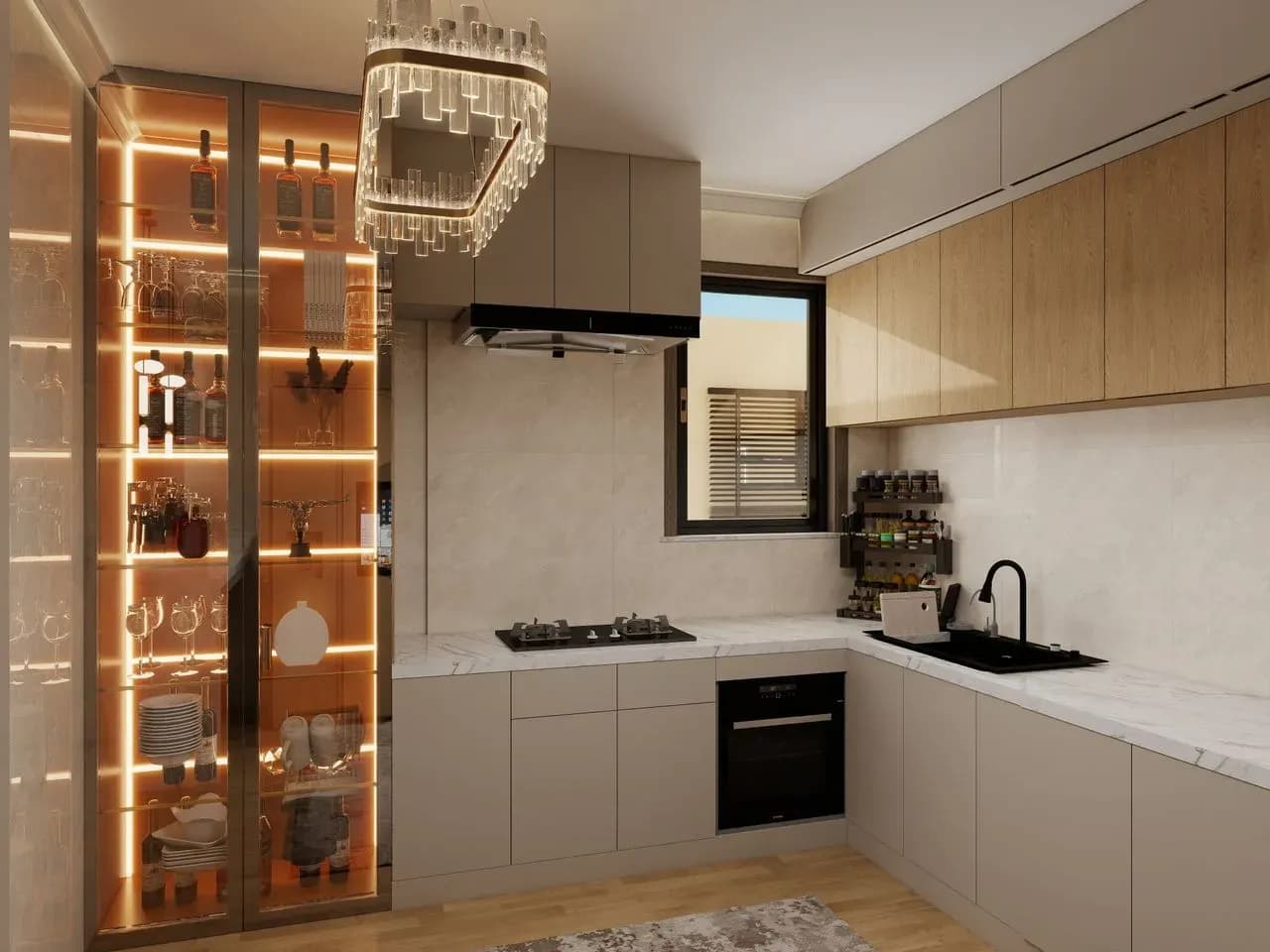
The kitchen is often one of the most important investments in a luxury home. Costs depend on the kitchen's size, layout, countertop material, cabinetry finish, internal accessories, appliances, and hardware.
BWP plywood combined with premium laminates, acrylic, veneers, or PU finishes can create a durable and sophisticated kitchen. High-quality soft-close hinges, drawer systems, lift-up mechanisms, and other accessories can further increase the cost.
Wardrobes & Storage
A 4BHK requires substantial storage across the master bedroom, children's bedrooms, guest rooms, dressing areas, and other spaces. Full-height wardrobes, walk-in closets, dresser units, shoe storage, and customized storage solutions can therefore represent a considerable part of the interior budget.
False Ceilings & Lighting
Large villas often benefit from layered lighting that combines cove lights, spotlights, pendant fixtures, decorative lighting, and smart controls.
The electrical layout should be planned at an early stage because adding new points or changing wiring after the ceiling and walls are finished can lead to additional costs and delays.
Civil, Flooring & Wall Finishes
Depending on the condition of the property, the project may require flooring replacement, wall modifications, waterproofing, plumbing adjustments, painting, or other civil work.
These expenses should ideally be identified during the initial site inspection rather than being treated as unexpected costs during execution.
Furniture & Décor
Luxury villa projects may also include sofas, dining tables, beds, side tables, curtains, rugs, artwork, mirrors, and decorative accessories. Bespoke furniture can create a more personalized interior but will naturally require a higher investment.
Smart Home & HVAC
Smart lighting, motorized curtains, security systems, air-conditioning, home automation, and other technology-driven features are increasingly popular in premium residences.
These requirements should be considered during the design phase so that electrical, networking, and ceiling provisions can be incorporated from the beginning.
For homeowners planning the interiors of an entire property rather than individual rooms, the full-home interior design cost guide provides another useful reference for understanding the broader cost structure.
Premium Material Options for Large Homes
Material selection has a direct impact on the appearance, durability, and cost of a 4BHK or villa interior. For high-use areas such as kitchens, master bedrooms, and living spaces, investing in durable materials can provide better long-term value.
For cabinetry, BWP plywood is a practical option where moisture resistance is important. Depending on the desired aesthetic and budget, it can be paired with laminates, acrylic, veneer, PU paint, or other decorative finishes.
For countertops and flooring, homeowners can consider options ranging from engineered surfaces and Indian marble to premium natural stone and Italian marble. Hardware can similarly range from standard soft-close fittings to premium concealed runners, hinges, lift-up systems, and motorized mechanisms.
A balanced material strategy is often more effective than using premium materials throughout the entire home. For example, the kitchen and master bedroom can receive higher-end finishes, while guest bedrooms and secondary spaces can use durable but more economical laminates.
This approach creates a premium overall appearance while keeping the project within a controlled budget.
Timeline for Villa Projects
Villa interiors generally require more time than standard apartment projects because they can involve multiple floors, extensive cabinetry, civil modifications, electrical work, and customized detailing.
A typical project progresses through the following stages:
- Site assessment and measurements – The existing structure, services, and site conditions are evaluated.
- Design and space planning – Furniture layouts, materials, lighting, electrical points, and storage requirements are finalized.
- Detailed drawings and approvals – Technical drawings and material specifications are prepared.
- Civil and service work – Plumbing, electrical modifications, flooring, waterproofing, and other preparatory work are completed.
- Carpentry and modular installation – Kitchens, wardrobes, storage units, and other built-in elements are manufactured and installed.
- Finishing work – Painting, polishing, lighting, hardware, false ceilings, and other finishes are completed.
- Furniture and styling – Loose furniture, soft furnishings, décor, and final accessories are installed.
The actual timeline will depend on the property's size, design complexity, material availability, extent of civil work, and whether the project relies on modular manufacturing, on-site carpentry, or a combination of both.
Modular vs. On-Site Carpentry for Villas
One of the most important decisions in a villa project is whether to use modular furniture, on-site carpentry, or a combination of both.
Modular solutions generally offer greater consistency, factory-controlled quality, faster installation, and precision in components such as kitchens and wardrobes. They work particularly well where spaces have standardized dimensions.
On-site carpentry, meanwhile, provides greater flexibility for unusual wall angles, curved spaces, architectural niches, customized furniture, and areas where standard modular units may not fit effectively.
The trade-off is that on-site carpentry requires greater supervision and can involve longer execution periods and higher labor costs.
For many large villa projects, a hybrid approach can be effective: modular kitchens and wardrobes can provide consistency and precision, while customized carpentry can be used for unique architectural features.
Managing Hidden Costs in a 4BHK Interior
A common misconception is that interior design costs are determined only by the quoted price of materials and furniture. In reality, poor coordination, material wastage, site delays, design changes, and rework can all increase the final expenditure.
An end-to-end interior design and execution firm may initially appear more expensive than hiring separate contractors. However, centralized project management can reduce coordination problems and improve accountability across design, procurement, manufacturing, and installation.
Clear documentation is particularly important when selecting premium materials. Homeowners should know the exact specifications of the plywood, hardware, finishes, stone, and other products included in the quotation. This makes it easier to compare vendors and verify that the supplied materials match the agreed specifications.
Making Your 4BHK Interior Budget Work Harder
A successful villa interior is not necessarily about spending the maximum amount on every room. Instead, the goal should be to allocate the budget where it delivers the greatest functional and visual value.
High-traffic areas such as the modular kitchen, master bedroom, living room, and frequently used storage spaces deserve greater attention because durable materials can provide better value over time. Secondary bedrooms and guest rooms can use more economical finishes without compromising the overall design language.
Most importantly, finalize your scope of work and financial priorities before execution begins. Discuss your preferred materials, expected finish quality, must-have features, and contingency budget with your design team during the planning stage.
With detailed space planning, transparent costing, appropriate material selection, and coordinated execution, a 4BHK or luxury villa in Delhi NCR can deliver a premium aesthetic and long-term functionality while keeping the overall investment under control.