Laminate vs Acrylic vs PU Finish: Which Is Best for Your Modular Kitchen?
Choosing the right finish for your modular kitchen is about much more than appearance. The finish you select affects how easily your cabinets can be maintained, how well they handle daily wear and moisture, and how your kitchen looks over the years. In Delhi, where kitchens can experience humidity, heat, dust, oil, and frequent cooking, choosing the right combination of finish and plywood is particularly important.
The three most popular options—laminate, acrylic, and PU finish—offer different advantages in terms of durability, aesthetics, maintenance, customization, and price. Laminates are generally the most practical and budget-friendly, acrylic is preferred for its sleek high-gloss appearance, while PU finish is suited to homeowners looking for a premium, seamless and highly customized look.
Before finalizing your kitchen, it is also important to understand the plywood grade used underneath the finish. A beautiful exterior cannot compensate for poor-quality or unsuitable plywood.
For a better understanding of the overall investment involved, explore the modular kitchen design cost guide before selecting your materials.
Laminate vs Acrylic vs PU Finish
Laminate Finish
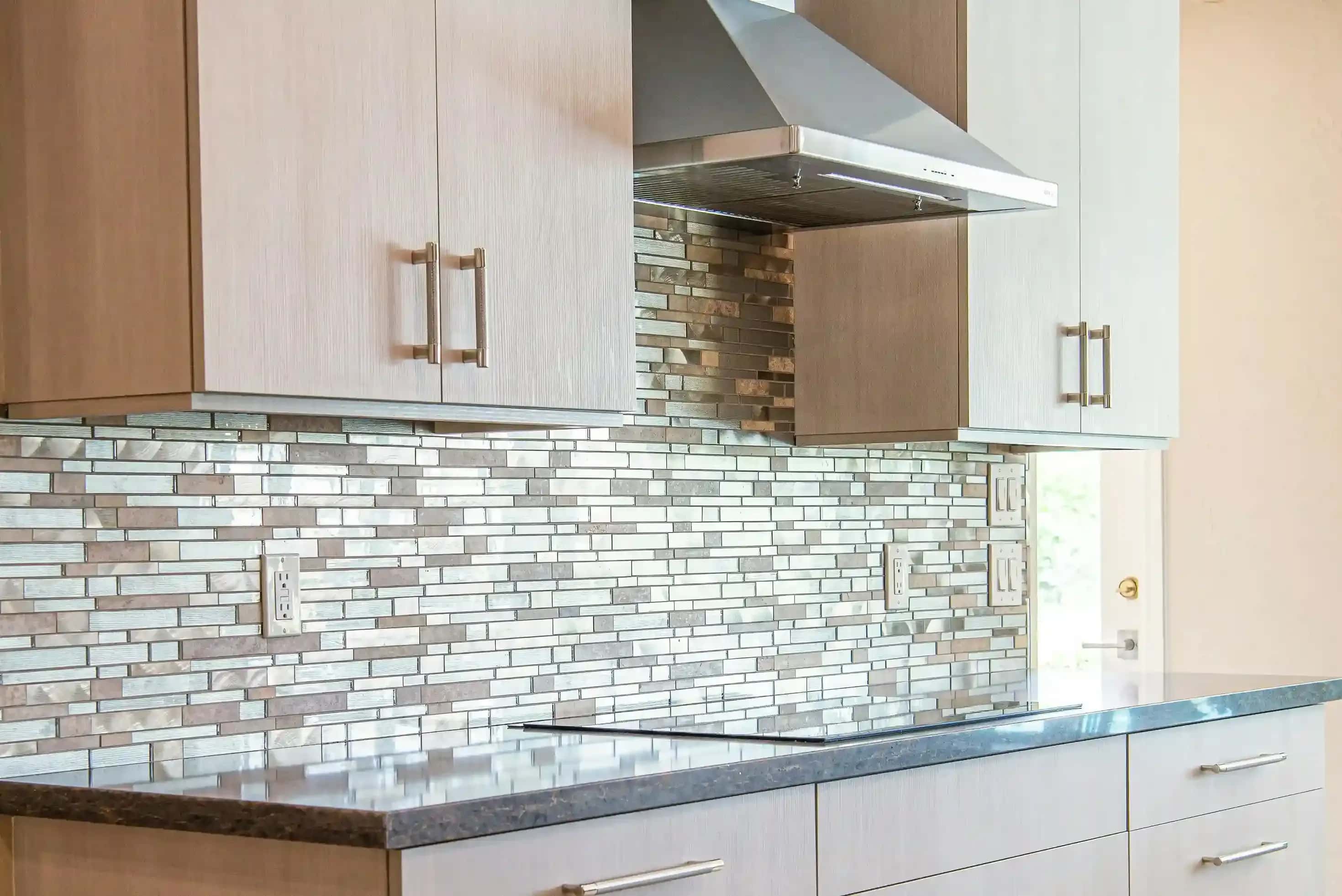
Laminate is one of the most widely used finishes for modular kitchens because it offers a strong balance between durability, design variety, easy maintenance, and affordability. It is made by pressing layers of decorative paper and resin under high pressure and then applying the finished sheet to a plywood or board surface.
Modern laminates are available in matte, glossy, textured, wood-grain, stone-inspired, and soft-touch finishes. Anti-fingerprint laminates are also increasingly popular for busy kitchens.
For Indian cooking, laminate is a practical choice because good-quality laminates can withstand everyday heat, stains, oil splashes, and regular cleaning. Textured or matte laminates are particularly useful in high-traffic kitchens because they tend to hide fingerprints and minor marks better than high-gloss surfaces.
Best for: Budget-conscious homeowners, rental properties, family kitchens, and high-traffic areas.
Acrylic Finish
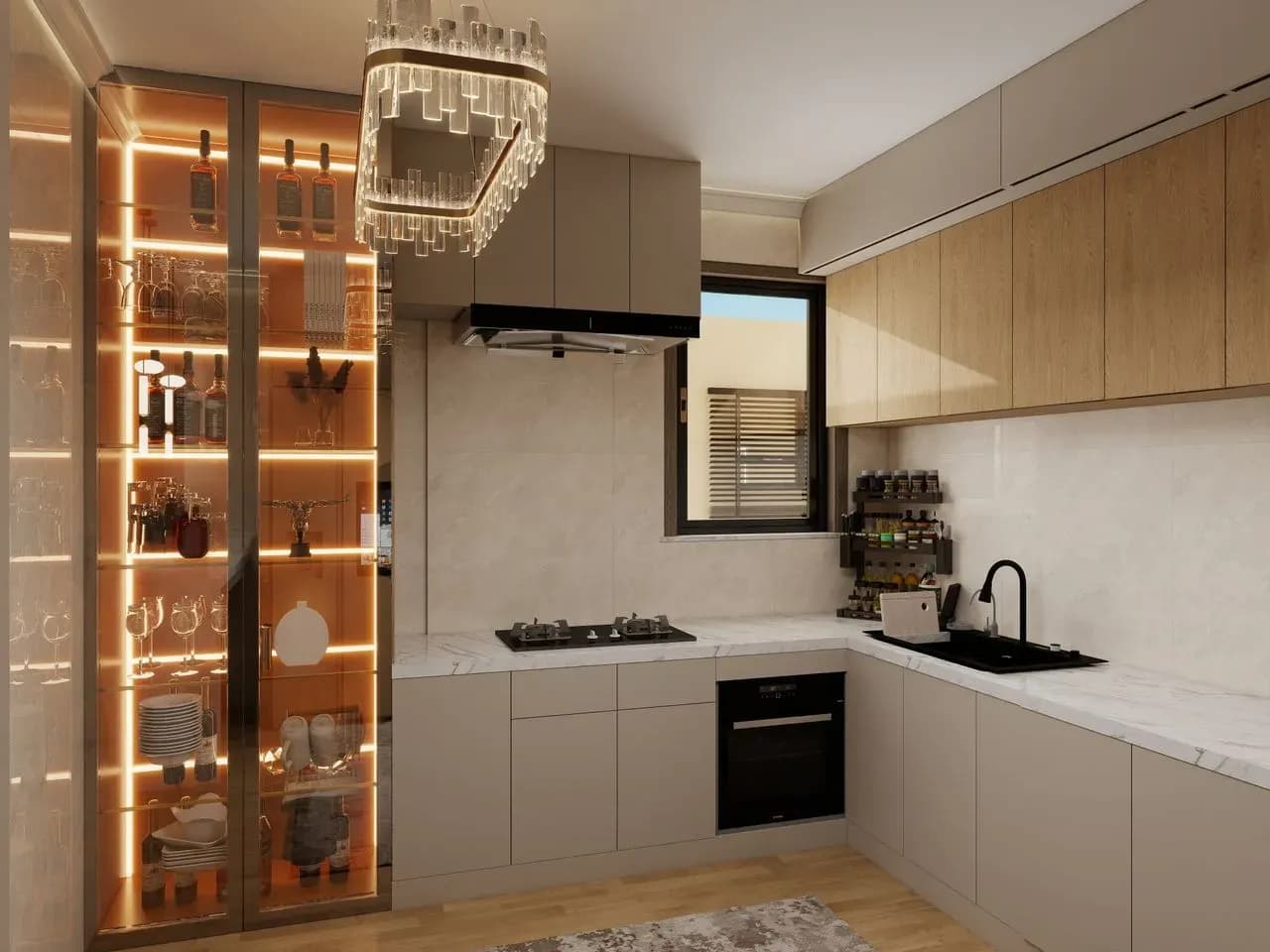
Acrylic is chosen primarily for its premium, reflective and contemporary appearance. It creates a smooth, high-gloss surface that can make a smaller kitchen appear brighter and more spacious by reflecting available light.
This makes acrylic particularly useful in Delhi apartments or kitchens with limited natural light. It works especially well with modern, handleless kitchen designs and minimalist cabinetry.
However, the glossy surface can make fingerprints, dust and minor scratches more visible. Acrylic cabinets therefore require regular cleaning with a soft microfiber cloth and suitable non-abrasive cleaning products.
The quality of the base board and installation also matters. Proper application helps minimize issues such as bubbling, warping, or premature deterioration.
Best for: Contemporary kitchens, compact spaces, high-gloss designs, and homeowners who prioritize visual appeal.
PU Finish
PU, or Polyurethane finish, is a premium painted finish applied directly to the cabinet shutters. Unlike sheet-based finishes such as laminate and acrylic, PU is applied as a liquid coating through a multi-stage painting process.
One of its biggest advantages is design flexibility. PU can be used on routed shutters, shaker-style cabinets, curved details, and other customized designs that can be difficult to execute with rigid laminate or acrylic sheets. It also creates a smooth, sophisticated appearance with fewer visible joints.
The trade-off is cost and maintenance. PU requires skilled application, controlled painting conditions, multiple coats, and adequate curing time. If the surface is badly scratched or damaged, professional refinishing may be required rather than simply replacing a laminate sheet.
Best for: Luxury kitchens, customized cabinetry, shaker kitchens, routed designs, and homeowners looking for a bespoke finish.
Plywood Grades Explained: BWP, MR and BWR
The finish is only one part of a durable modular kitchen. The plywood underneath the finish plays an equally important role, particularly in a climate such as Delhi's.
Three plywood grades commonly discussed for interior applications are MR, BWR and BWP.
MR Grade Plywood
MR stands for Moisture Resistant plywood. Despite the name, MR plywood is not waterproof. It is designed to handle normal indoor conditions but is less suitable for areas that experience frequent exposure to water or high moisture.
It can be considered for relatively dry portions of a home, but homeowners should be more cautious about using it in areas close to the kitchen sink or plumbing.
BWR Grade Plywood
BWR stands for Boiling Water Resistant. It offers better resistance to moisture than MR plywood and is generally a more suitable option for kitchen applications where occasional exposure to water is possible.
For homeowners looking for a balance between performance and cost, BWR plywood can be considered for suitable kitchen components, provided the construction, sealing and installation are also done correctly.
BWP Grade Plywood
BWP stands for Boiling Waterproof and is commonly associated with higher moisture resistance. It is often selected for areas that are particularly vulnerable to water exposure, such as sink units and other wet zones.
For a long-lasting modular kitchen, BWP-grade plywood is worth considering for moisture-prone areas, especially when combined with proper edge sealing, quality hardware and professional installation.
The important point is that plywood grade, finish quality, edge treatment and installation all work together. Choosing premium plywood while ignoring edge protection or poor installation can still lead to premature problems.
Which Material Lasts Longest in Delhi's Climate?
Delhi kitchens have to deal with a combination of heat, dust, humidity, oil, moisture and intensive daily use. Therefore, longevity depends not only on the surface finish but also on the plywood grade, edge banding, adhesive quality and workmanship.
For a busy family kitchen, high-quality laminate is often the most practical choice because it is relatively easy to maintain and offers strong resistance to everyday wear. Modern anti-fingerprint and scratch-resistant laminates can also provide a premium appearance without the maintenance associated with some high-gloss surfaces.
Acrylic can also perform well when properly manufactured and installed, but its glossy surface tends to make fingerprints and minor scratches more noticeable. It is an excellent option where aesthetics and light reflection are priorities.
PU provides a premium and highly customized finish, but its performance depends heavily on the quality of application. Since it is a painted surface, repairs to significant scratches or damage may require professional refinishing.
For Delhi homeowners, the construction underneath the finish is just as important as the finish itself. Pay close attention to the plywood grade used in moisture-prone areas and ask your kitchen manufacturer about edge sealing and edge banding.
Poorly protected plywood edges can allow moisture to penetrate the core, potentially causing swelling and deterioration. A well-executed edge treatment therefore contributes significantly to the long-term durability of your kitchen.
If you are comparing the benefits of a factory-made modular kitchen with traditional site-built cabinetry, you can also read this guide on modular kitchen vs carpenter-made kitchen.
Cost Difference Between Laminate, Acrylic and PU Finish
The cost of a modular kitchen depends on much more than the visible finish. The plywood grade, cabinet configuration, hardware, accessories, kitchen size, installation method, shutters and finish all contribute to the final price.
In general, laminate is the most economical of the three options. Acrylic typically falls into a higher price bracket because of the material and application requirements, while PU is generally considered a premium finish because of its labor-intensive preparation and painting process.
However, choosing the cheapest finish is not always the most economical decision in the long term. A kitchen used heavily every day may benefit from investing in durable, easy-to-maintain laminates, while a homeowner prioritizing a luxury appearance may find the additional cost of acrylic or PU worthwhile.
A useful way to compare your options is to calculate your kitchen requirements before finalizing the design. You can use the Velmore Living Kitchen Price Calculator to get a better understanding of how different specifications can affect your estimated kitchen budget.
Which Finish Should You Choose?
For most homeowners, the decision can be simplified based on lifestyle:
- Choose laminate if durability, easy maintenance and budget are your top priorities.
- Choose acrylic if you want a modern, glossy kitchen with a brighter and more spacious appearance.
- Choose PU if you want a premium, customized finish with options for shaker, routed or intricate cabinet designs.
- Consider a combination if you want to balance aesthetics and cost—for example, acrylic on upper cabinets and durable laminate on lower cabinets that experience more frequent contact and impact.
Before making your final decision, visit a showroom and inspect actual material samples rather than relying only on photographs. Look at the finishes under different lighting conditions, touch the surfaces, examine the edges and ask about the plywood, adhesive, edge banding and hardware being used.
Ultimately, the best modular kitchen is not simply the one with the most expensive finish. It is the one where the plywood, surface finish, edge treatment, hardware and installation quality are matched to your lifestyle and the demands of your kitchen.